DPAH Markovian Matrix: Dew-Point Anchor Hypothesis – Run401 Modular Skeleton and Stable Tropical Attractor (30 April 2026)
Description
This notebook series implements the Dew-Point Anchor Hypothesis (DPAH) using a Markovian state-space approach. Conventional climate models rely on top-down radiative forcing with surface temperature as the primary diagnostic. In contrast, DPAH treats the dew-point lifting condensation level (LCL) as an independent physical anchor. From this boundary, the tropospheric column is integrated downward using hydrostatic equilibrium and adiabatic processes.
Run401 establishes a clean, modular, vectorized Python skeleton (DPAHMarkovModel class) with:
- Full column physics (moist-adiabat upward + limited dry-adiabatic descent) pre-computed for every state.
- Explicit dewpoint (D) dimension controlling LCL height and surface T.
- Regime-specific scoring (Ascent/ITCZ vs Descent/subtropical high).
- Tunable film_suppression parameter to test ocean-surface evaporation throttling (Isakov hypothesis).
- Automatic marginal histograms + PNG export.
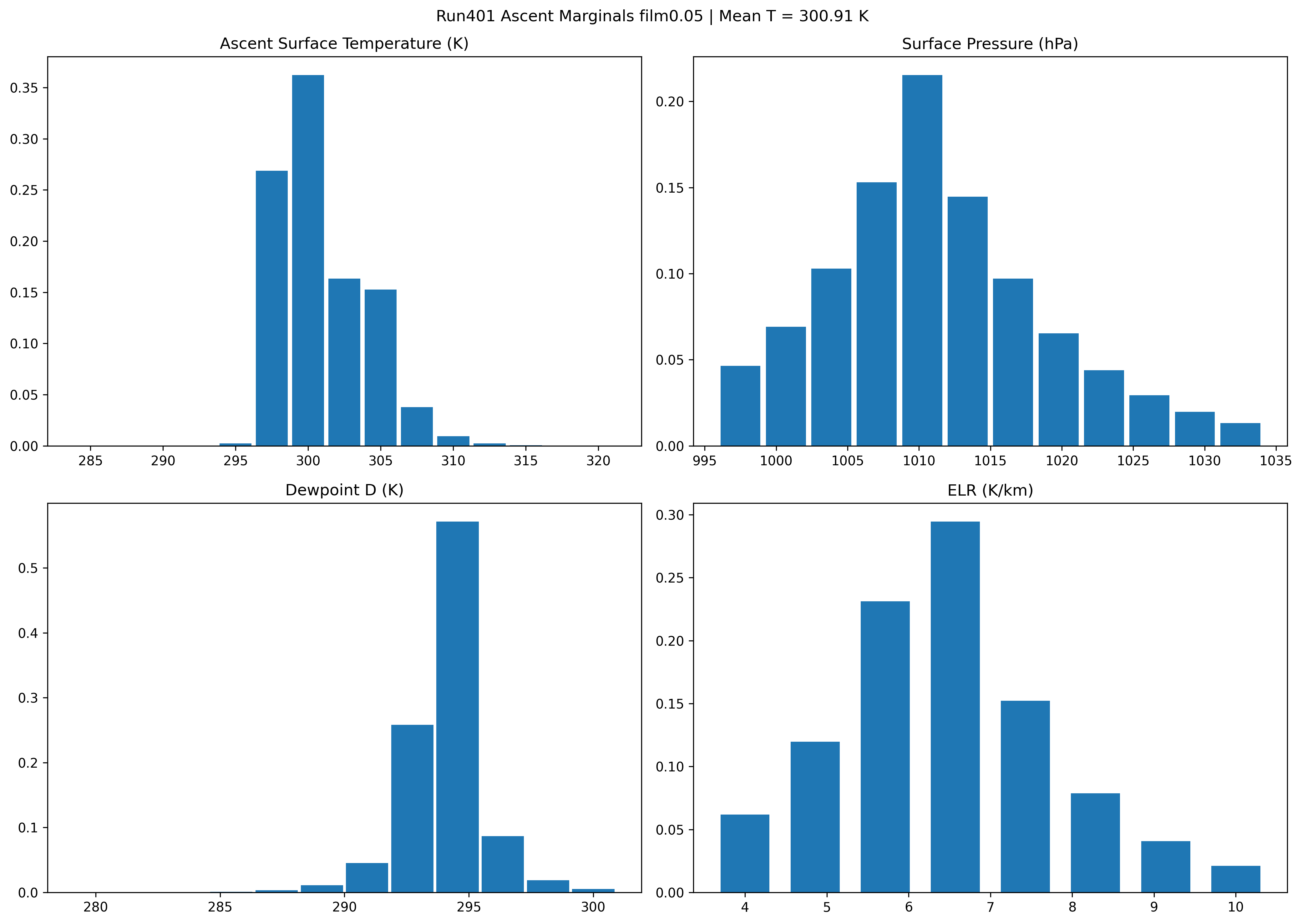
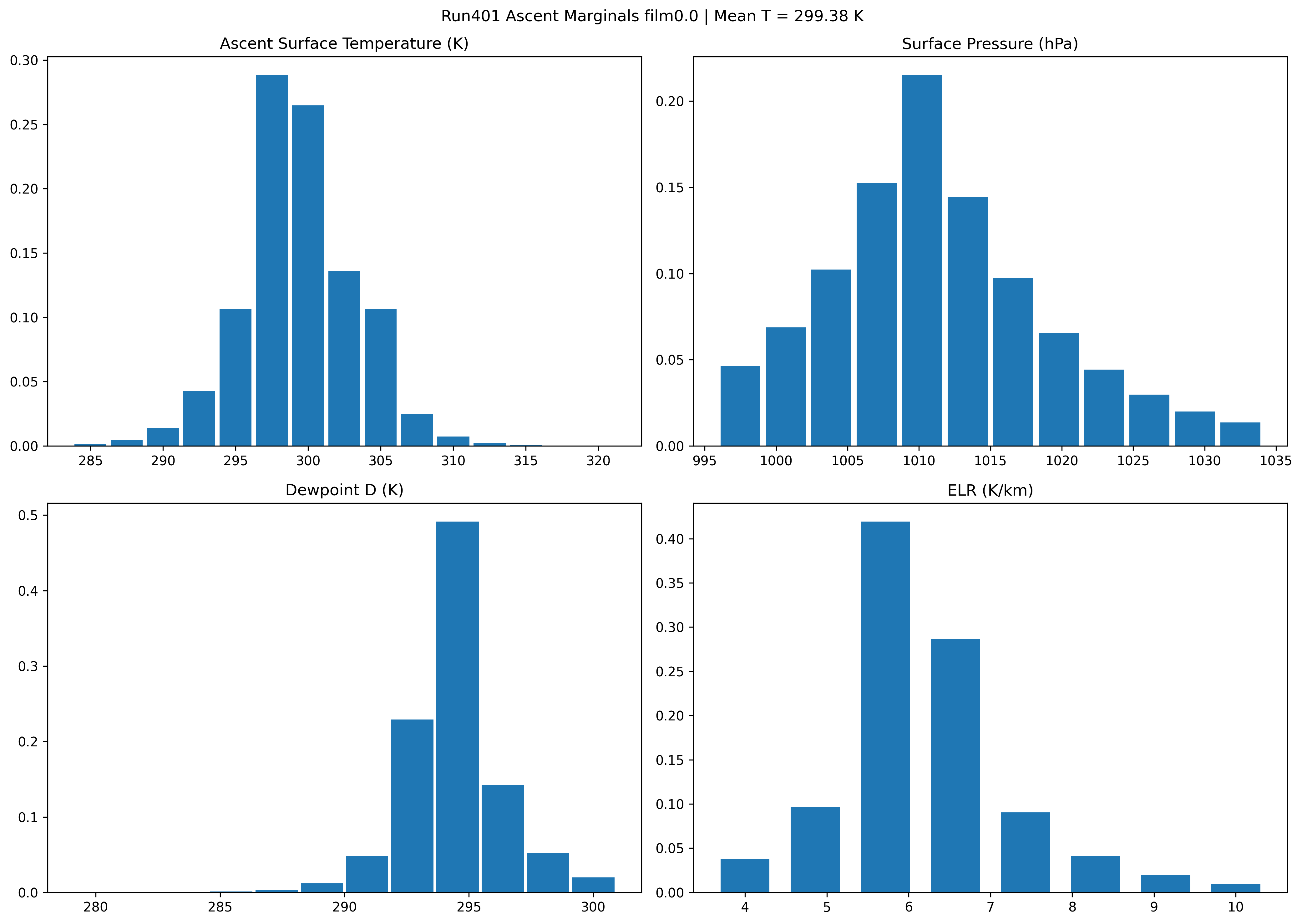
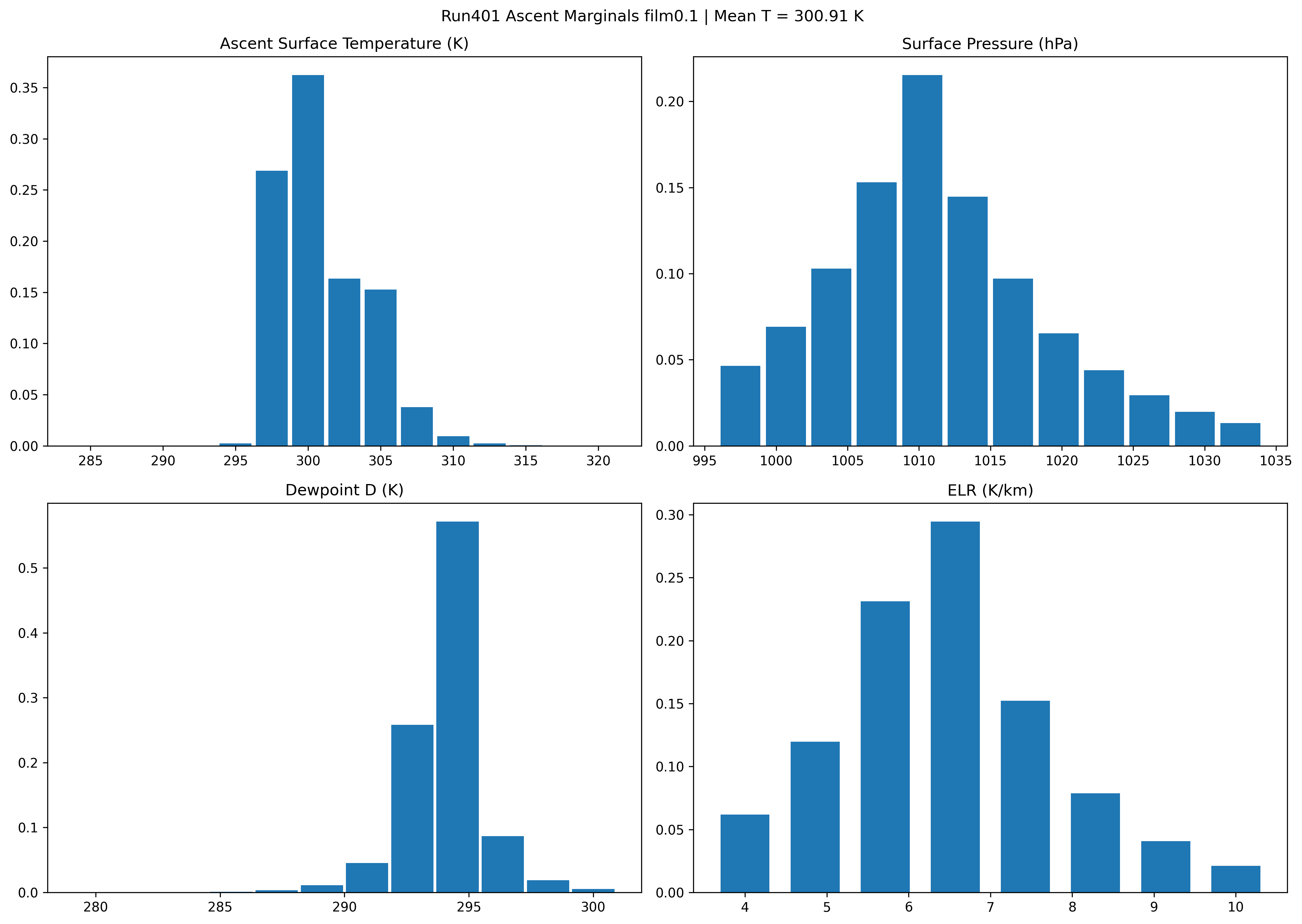
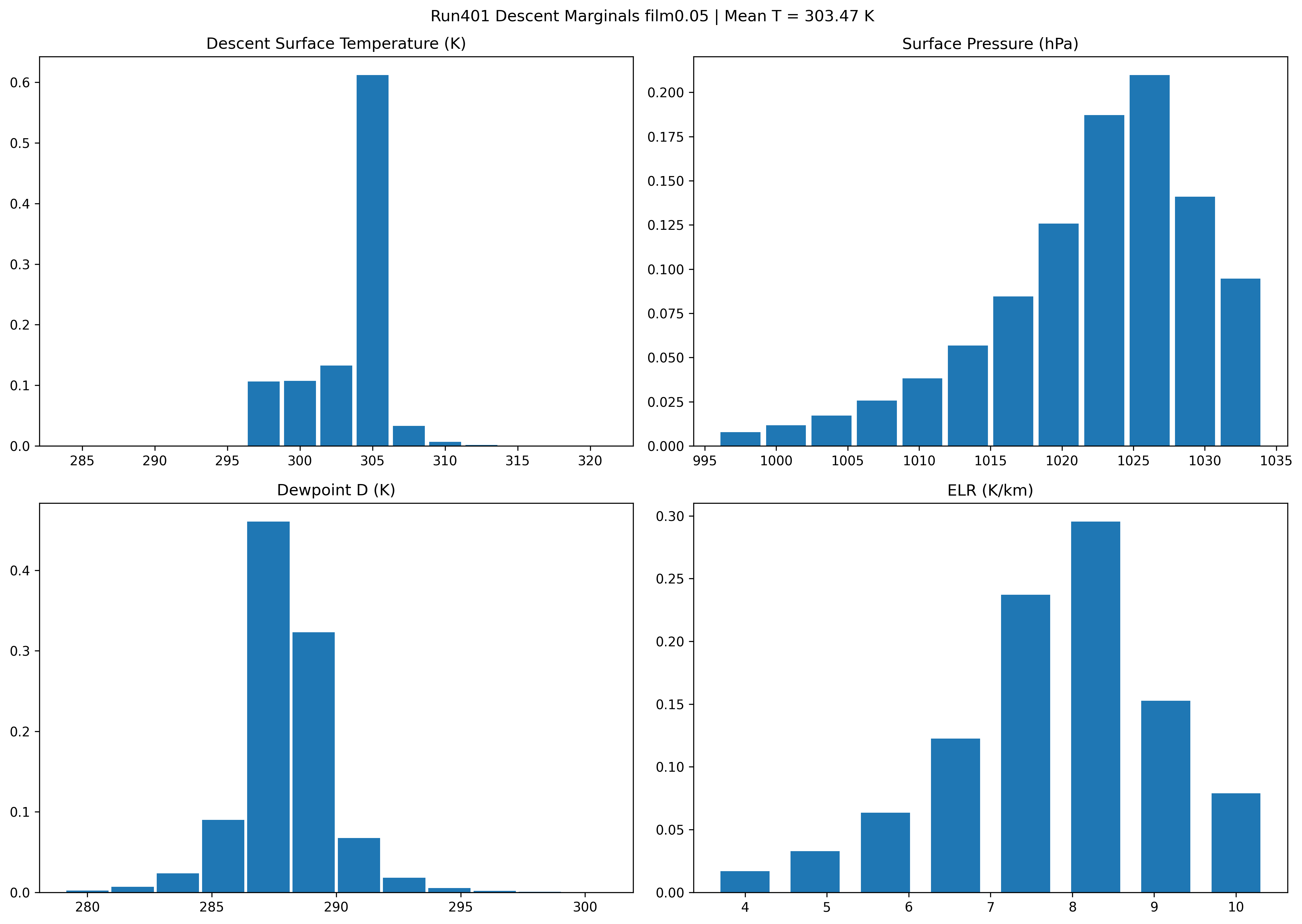
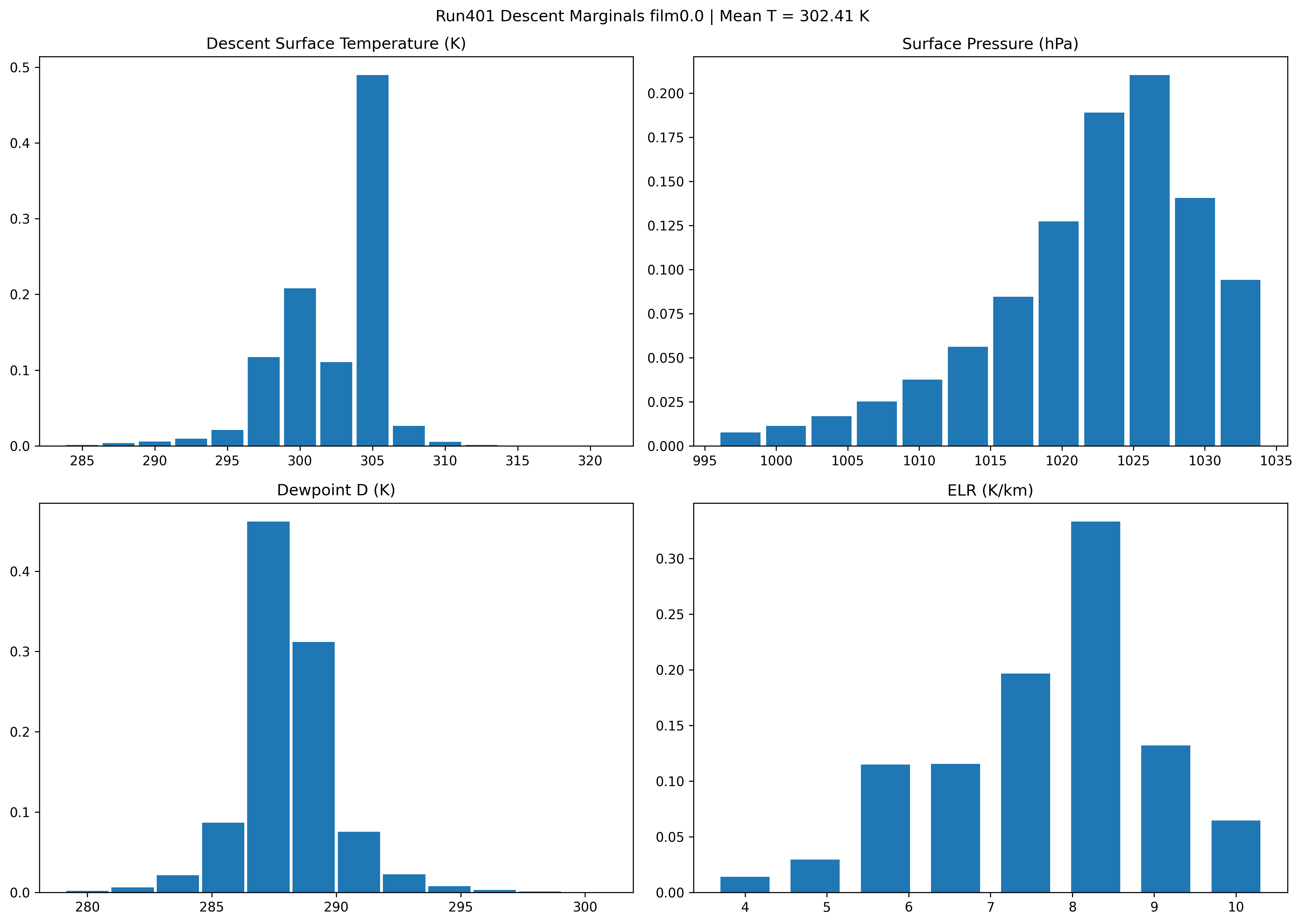
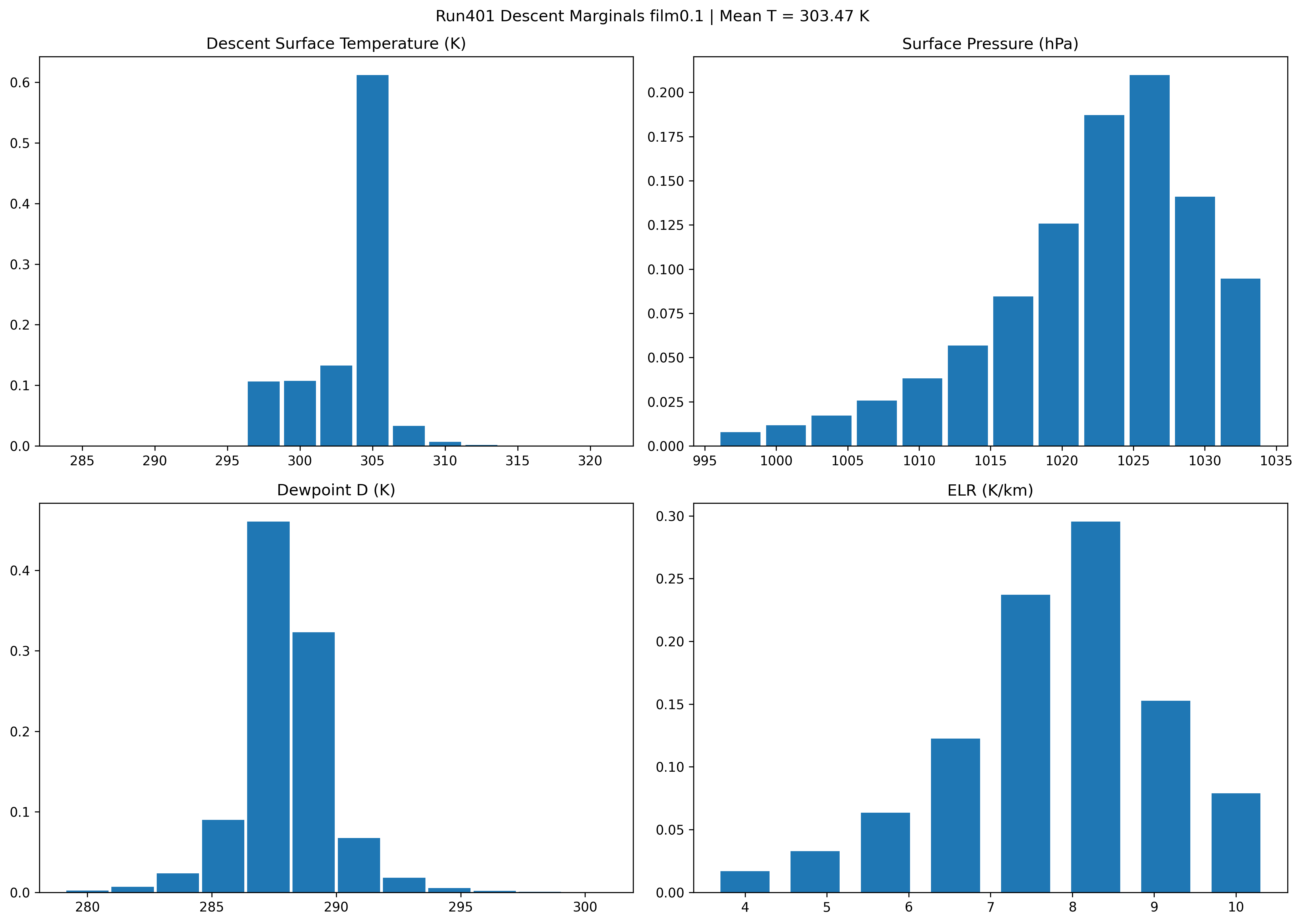
The stationary distribution converges rapidly to a physically realistic warm-moist attractor in the tropical ascent regime and a stable subtropical descent regime. Film suppression (0–10 %) has minimal impact on stationary temperature, demonstrating the strong negative feedback of the dew-point thermostat.
Key Results – Run401 v6 (film-suppression sweep)
| Regime | Film Suppression | Peak T (K) | Mean Stationary T (K) | Notes |
|---|---|---|---|---|
| Ascent | 0.0 | 297.5 | 299.38 | Sharp warm-moist ITCZ peak; P ≈ 1010 hPa, D ≈ 295 K, ELR ≈ 6–7 K/km |
| Ascent | 0.05 | 300.0 | 300.91 | Thermostat remains robust |
| Ascent | 0.10 | 300.0 | 300.91 | Strong dew-point stabilisation confirmed |
| Descent | 0.0 | 305.0 | 302.41 | Realistic subtropical high-pressure regime |
| Descent | 0.05 | 305.0 | 303.47 | Stable |
| Descent | 0.10 | 305.0 | 303.47 | Stable |
Pure physics diagnostic: Mean preferred_T ≈ 302.93 K (Ascent, film=0) – the Markov chain now faithfully follows the DPAH column integrator.
Zenodo Deposit Notes
- This marks the completion of the Run401 baseline.
- All prior runs (v1–v5) are archived in the Excel log for provenance.
- Next iteration (Run402) will focus on explicit dry-subsidence refinement in the Descent leg.
Files
Markovian Matices NoteBook Flow4 30Apr-01May26.pdf
Files
(5.9 MB)
| Name | Size | Download all |
|---|---|---|
|
md5:bd0b6949d263fbd41304c7df62592638
|
4.6 MB | Preview Download |
|
md5:37684fefa7884d388b401975e96aeaeb
|
10.2 kB | Download |
|
md5:39768dd55347319db7f5f7f01866afd1
|
8.5 kB | Download |
|
md5:bded014be1e10a33588c091002f21eb4
|
200.9 kB | Preview Download |
|
md5:c5f086076e6c0a18874d082ba16166d8
|
203.8 kB | Preview Download |
|
md5:b3637c49103241f34a3a2c1baed5eb36
|
198.9 kB | Preview Download |
|
md5:16d8e29db9e71e58ad585e9b288e66b2
|
207.2 kB | Preview Download |
|
md5:d2bcd0d055f6bf406ba98f8ba4f4cdc9
|
203.3 kB | Preview Download |
|
md5:b5682f514bf23d9e225286ceda825efc
|
205.2 kB | Preview Download |
Additional details
Software
- Programming language
- Python